
Itch, or pruritus, is one of the most common and distressing symptoms in dermatology. While often dismissed as a minor inconvenience, persistent itch can severely impact quality of life and contribute to a damaging cycle of skin barrier disruption and inflammation. In this article, we explore the underlying causes of itch in skin diseases, its effect on skin physiology, and how modern cosmetic science addresses this symptom with neuro-soothing and barrier-supportive ingredients.
- Atopic dermatitis
- Seborrheic dermatitis
- Contact dermatitis
- Urticaria
Suggested Figure 1: Seborrheic Dermatitis Across Life Stages
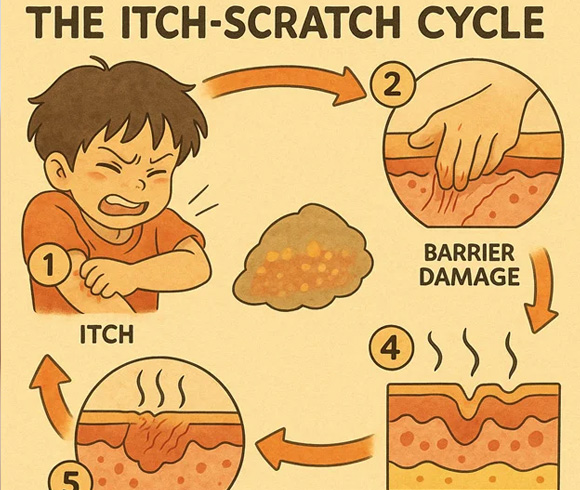
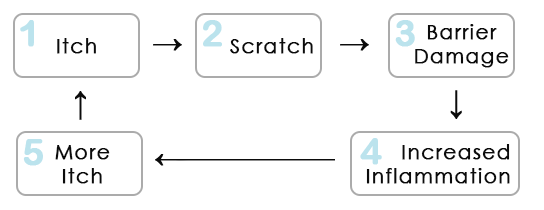
Caption: A child repeatedly scratching his skin due to intense itch. Over time, this behaviour can damage the skin barrier, leading to inflammation, dryness, and eventually visible eczema — illustrating the itch-scratch cycle in action. Diagram of the itch-scratch cycle showing progressive barrier breakdown.
Why the Skin Barrier Matters The skin barrier, primarily formed by the stratum corneum, acts as the body’s first line of defence. It retains moisture and prevents entry of allergens, pathogens, and irritants. When compromised by scratching or inflammation, this barrier becomes permeable, accelerating transepidermal water loss and perpetuating the inflammatory response.
Restoring the barrier is a cornerstone of itch management. Cosmetic formulations enriched with:
- Ceramides
- Fatty acids and cholesterol
- Saccharide isomerate help replenish barrier lipids and improve hydration.
Practical Application in Cosmetic Formulations Cosmetic products targeting itch should:
- Be fragrance-free and hypoallergenic
- Contain barrier-repairing lipids and humectants
- Incorporate neuro-soothing actives in physiologic concentrations
For example:
- Menthol-containing lotions may be useful for post-shower application on intact, itchy skin.
- Barrier creams with HPA-benzoic acid and allantoin are suitable for sensitive, inflammation-prone areas.
Conclusion Itch is not merely a symptom; it is a signal of underlying barrier dysfunction and inflammation. Addressing itch effectively requires a two-pronged approach: calming the sensory response and repairing the physical barrier. With the right cosmetic actives and consistent care, the itch-scratch cycle can be broken, leading to healthier, more resilient skin.
Disclaimer: This article is intended for general skincare education only. Please consult a healthcare provider for personalised medical advice.