
Is All Eczema on the Face, Scalp, and Neck the Same? Understanding Atopic and Seborrheic Dermatitis
Facial and scalp eczema can be distressing, especially when it affects visible areas like the forehead, eyelids, nose, and ears. However, what many people don’t realise is that not all eczema in these regions is the same. Two of the most common causes of inflammation in these areas are atopic dermatitis (AD) and seborrheic dermatitis (SD). Though they can appear similar, these conditions have different causes, symptoms, and treatment strategies. Understanding their differences is crucial for choosing the right skincare approach.
Understanding Atopic Dermatitis (AD) Atopic dermatitis is a chronic, relapsing inflammatory skin disease. It usually begins in childhood but can persist or even start in adulthood. AD is commonly associated with a personal or family history of asthma, allergic rhinitis, or other atopic conditions.
Cause
Genetic predisposition, impaired skin barrier, and immune dysregulation.
Triggers
Environmental allergens, soaps, fragrances, stress, heat, and sweating.
Appearance
Red, dry, scaly patches. Skin may appear cracked or thickened from chronic scratching.
Distribution on the face/head/neck
Eyelids, cheeks, around the mouth, and neck folds.
Dermatologist Tip: If you have dry, flaky skin on the eyelids or neck, and a history of allergies or asthma, it’s likely atopic dermatitis. Avoid harsh soaps and moisturise regularly with fragrance-free products.
Understanding Seborrheic Dermatitis (SD) Seborrheic dermatitis, on the other hand, tends to affect oil-rich areas of the skin and is driven by a different mechanism. It is particularly common in adults and infants (where it presents as cradle cap).
Cause
Overgrowth of Malassezia yeast in combination with excess sebum production and a weakened skin barrier.
Appearance
Red, greasy patches with yellowish or white scales.
Distribution
Scalp, eyebrows, sides of the nose, eyelids, ears, and beard area.
Triggers
Cold weather, hormonal changes, stress, and oily skin.
Dermatologist Tip: If your skin feels greasy but flakes, especially in the T-zone or scalp, you may be dealing with seborrheic dermatitis rather than dryness.
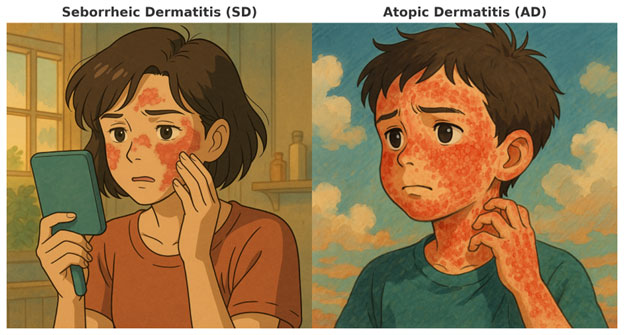
Figure 1: Side-by-side image comparison of AD and SD on similar facial areas (e.g. eyelids, nasolabial folds, scalp).
Key Differences Between AD and SD
| Feature | Atopic Dermatitis | Seborrheic Dermatitis |
|---|---|---|
|
Skin Feel |
Dry, tight, inflamed |
Oily, flaky, mildly itchy |
|
Common Locations |
Eyelids, neck, cheeks |
Scalp, nose, eyebrows, ears |
|
Age Group |
Typically starts in childhood |
More common in adults or infant |
|
Triggers |
Allergens, irritants, heat, sweating |
Oily skin, cold weather, Malassezia |
|
Treatment Focus |
Moisturisation, barrier repair |
Antifungal care, sebum contro |
Why Accurate Diagnosis Matters Misinterpreting seborrheic dermatitis as dry skin can lead to using overly rich moisturisers that may worsen the condition. Likewise, treating AD with antifungal ingredients may not provide relief and could even irritate already sensitive skin.
Understanding the root cause helps determine the appropriate use of:
- Barrier-repair agents (e.g. ceramides, saccharide isomerate)
- Antifungal actives (e.g. piroctone olamine)
- Soothing agents (e.g. allantoin, hydroxyphenylpropamidobenzoic acid)
Management Approaches
For Atopic Dermatitis:
- Use fragrance-free emollients regularly.
- Avoid known allergens and irritants.
- Consider low-potency topical steroids for flares under supervision.
- Incorporate ceramide-rich moisturisers to restore the barrier.
For Seborrheic Dermatitis:
- Use mild, pH-balanced cleansers.
- Incorporate antifungal ingredients such as piroctone olamine.
- Use lightweight moisturisers to support the barrier without clogging pores.
- Avoid greasy or heavy occlusive creams in oily areas.
Dermatologist Tip: Choose skincare that matches the mechanism of your condition—not just the symptoms. Treating oiliness with oil, or dryness with antifungals, may worsen your skin.
Conclusion Not all eczema on the face, scalp, or neck should be managed the same way. Recognising the subtle but important differences between atopic and seborrheic dermatitis can help you make more informed choices about your skincare routine. A personalised skincare plan—whether it includes ceramide-enriched creams, piroctone olamine-containing formulations, or balancing cleansers—can make a meaningful difference.