
Menthol is a familiar ingredient in many personal care products—from body lotions to scalp treatments. Known for its unmistakable cooling effect, menthol adds a refreshing touch to skincare. But while it can be soothing in some cases, it may cause discomfort or irritation if used on the wrong type of skin. This article explains how menthol works, when it’s helpful, and when it should be avoided, especially for people with sensitive or compromised skin.
How Menthol Works
Menthol gives a cooling sensation by interacting with specific sensors in our skin called TRPM8 receptors. These are the same receptors that respond to cold temperatures. When menthol touches the skin, it “tricks” the brain into feeling cool, even if the skin’s temperature hasn’t changed.
- Helps relieve itch and minor irritation
- Refreshes the skin after exercise or a hot day
- Provides a pleasant tingling feeling in creams and lotions
- Cooling body lotions
- After-sun gels
- Scalp and dandruff treatments
- Sports balms and patches
Benefits of Menthol
- Relieves Mild Itching: On healthy skin, menthol helps take the edge off itchiness.
- Cooling Effect: Great for post-exercise use or in hot, humid weather.
- Pleasant Sensory Experience: The cooling tingle can make creams feel more effective and enjoyable to use.
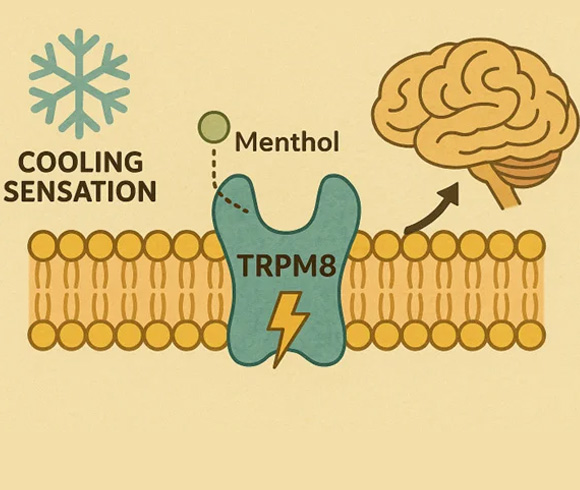
Suggested Figure 1: A diagram showing how menthol activates the skin’s cooling sensors (TRPM8 receptors).
When Menthol Can Be a Problem
Menthol isn’t for everyone. If your skin is damaged or very sensitive, menthol might make things worse instead of better.
Avoid menthol on:
- Skin that is scratched, raw, or inflamed
- Eczema flare-ups or rashes
- Sensitive areas like eyelids or lips (mucosal skin)
Possible side effects:
- Burning or stinging feeling
- More redness or sensitivity
- Rare allergic reactions
Using Menthol Safely
- Choose products with low amounts of menthol (usually less than 1%)
- Use only on healthy, unbroken skin
- Combine with soothing ingredients like ceramides, allantoin, or oat extracts
Dermatologist Tip: Only use menthol-based products on intact, healthy skin. If your skin is scratched, irritated, or actively flaring, go for calming ingredients without menthol, like oat-based soothers or ceramide creams.
**This careful balance ensures menthol gives benefits without side effects.